



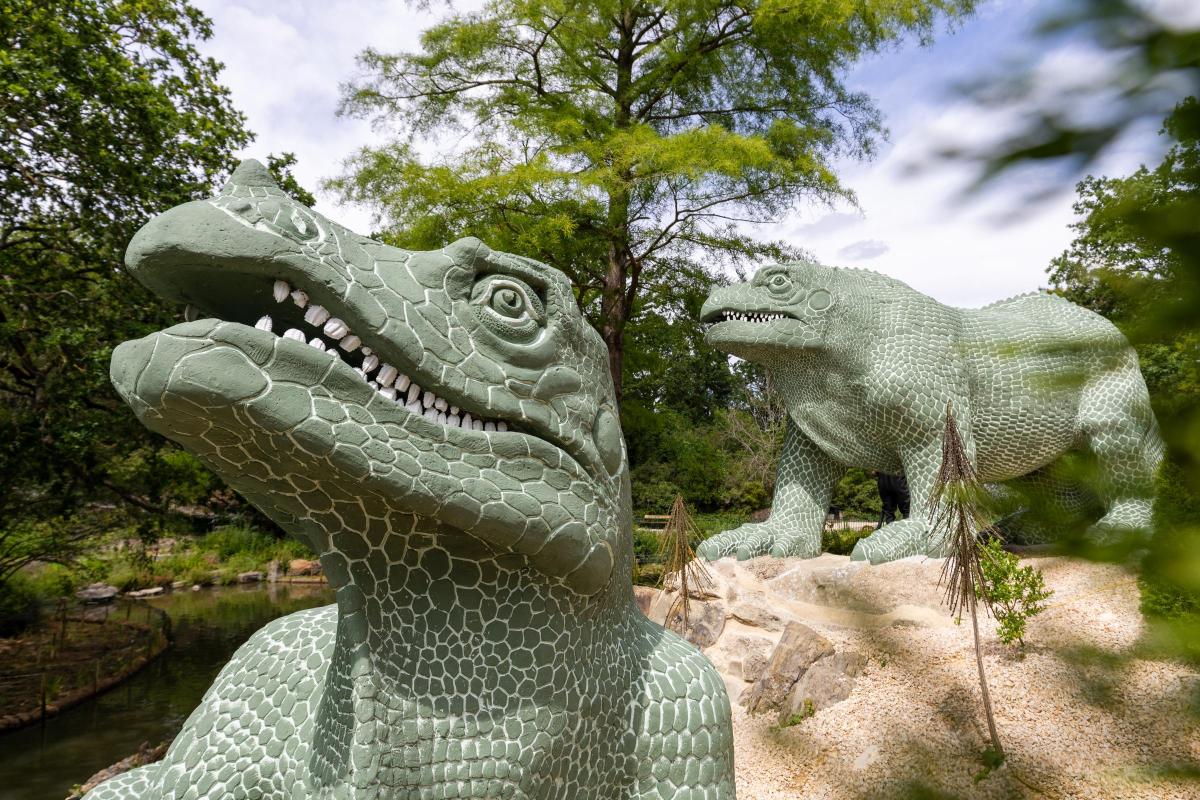
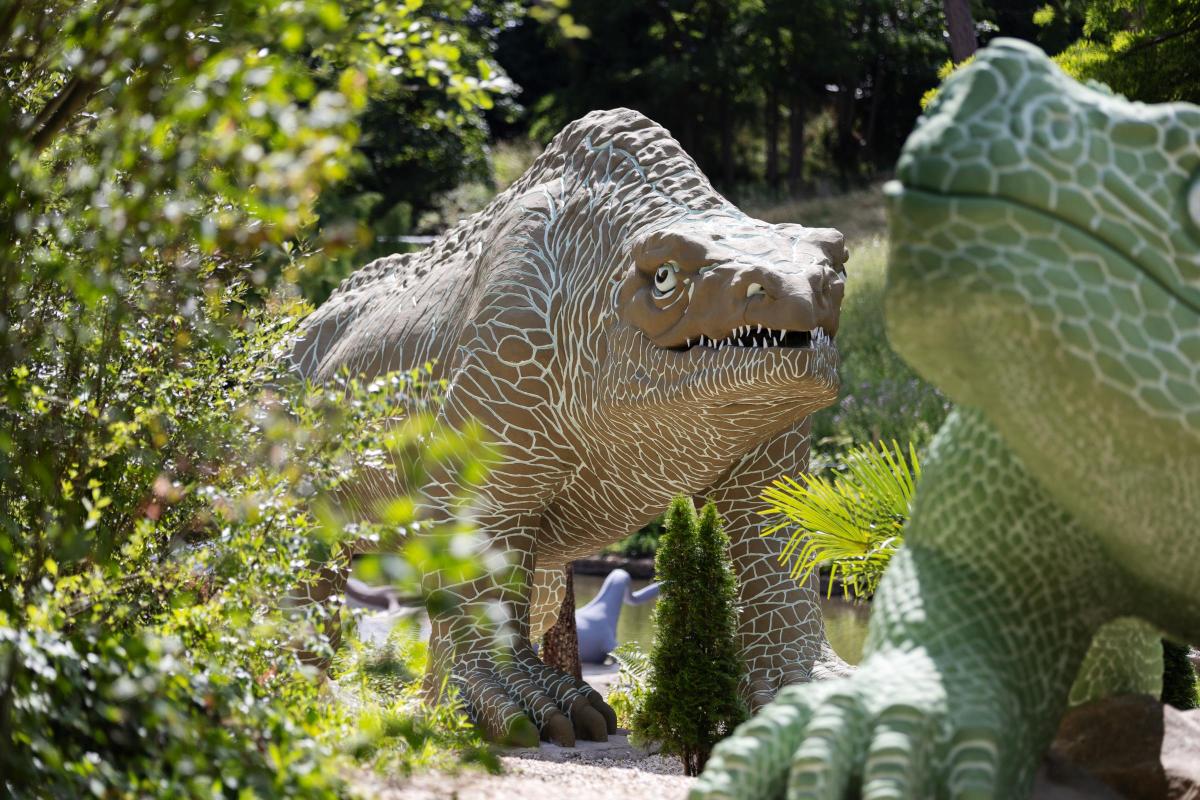
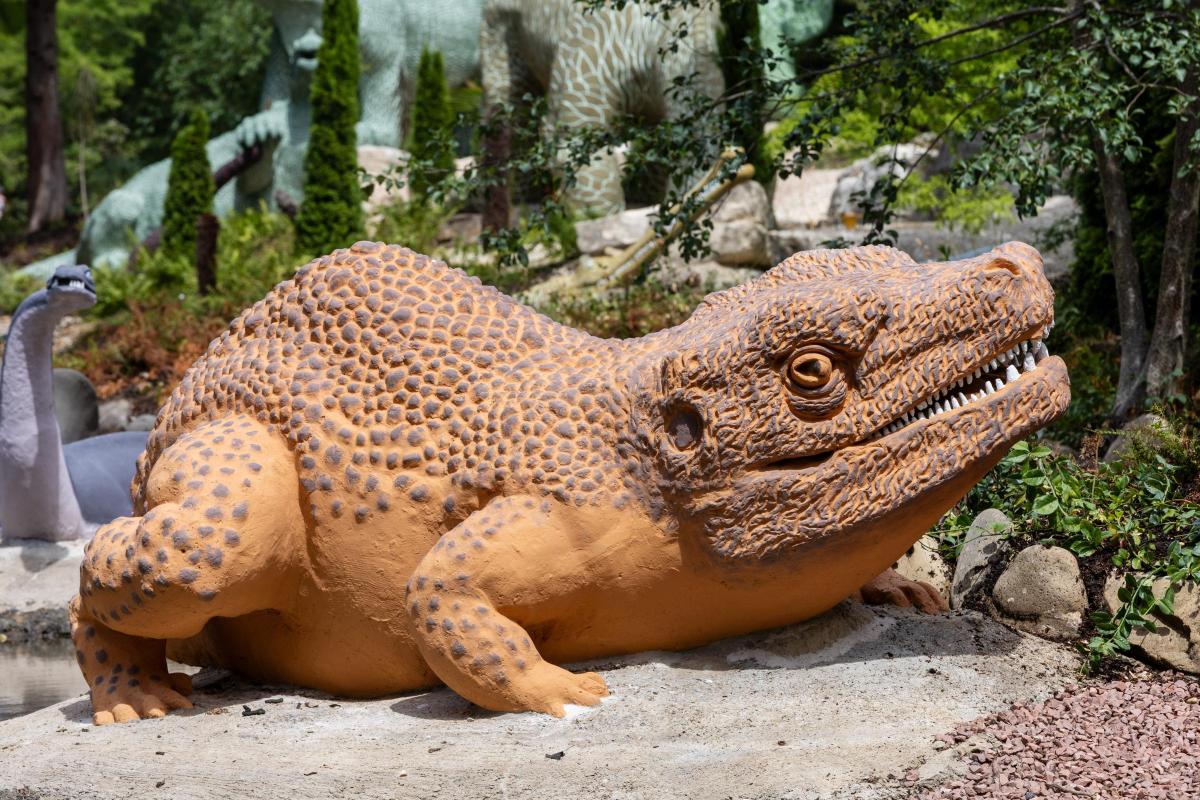

Crystal Palace Park's iconic dinosaurs, dating back to the early 1850s, have been removed from the Heritage at Risk Register after a complete transformation.
The Crystal Palace Dinosaurs were created between 1852 and 1855 by Victorian artist Benjamin Waterhouse Hawkins and are recognised as the world's first-ever life-sized prehistoric animal sculptures.
Set around the park's Lower Lake, the Grade I-listed models and surrounding geological features had fallen into poor condition after decades of weather damage and overgrown vegetation, leading to their inclusion on Historic England's Heritage at Risk Register.

But now the dinosaurs and Geological Court have been removed from Historic England's Heritage at Risk Register following a major restoration programme as part of a multi-million-pound regeneration project.
The project, funded jointly by Bromley Council and Crystal Palace Park Trust, with a £5 million boost from The National Lottery Heritage Fund and additional support from other charitable foundations, has ensured the Grade I-listed sculptures can continue to be enjoyed by visitors for generations to come.
Eilish McGuinness, chief executive of The National Lottery Heritage Fund, said: "We are incredibly proud that our funding has helped secure the future of its world-famous dinosaurs, restoring these remarkable Victorian landmarks and ensuring that they can be valued and enjoyed by future generations."
The historic statues, which also appeared in the television series Good Omens starring David Tennant and Michael Sheen, were initially added to the register due to large cracks appearing in the sculptures, alongside wider deterioration and concerns that parts of the dinosaurs could be lost.

Claudia Kenyatta and Emma Squire, co-chief executives of Historic England, said the sculptures are an "internationally important" part of the history of science, representing how Victorians understood prehistoric animals to look.
They added: "The Crystal Palace Dinosaurs were added to our Heritage at Risk Register in 2020 due to concerns about their structural stability and deterioration, but these masterpieces are now fully restored and their colours vibrant again."
Works began in 2025 and included specialist conservation repairs, structural stabilisation, cleaning, repainting using the original Victorian colour schemes and extensive restoration of the surrounding landscape to return the site to how it would have looked 172 years ago.
Works also took place in the landscape surrounding the sculptures, including the Geological Court, to restore the area to its former glory.
They form part of a wider regeneration programme that has also delivered a new dinosaur-themed playground, a visitor centre, improvements to accessibility, and restoration work to the Italian Terraces and Grand Centre Walk.


Share